iCANSleep mHealth App Development for Cancer Survivors

Turning an Evidence-Based Insomnia Treatment Into a Guided Digital Program

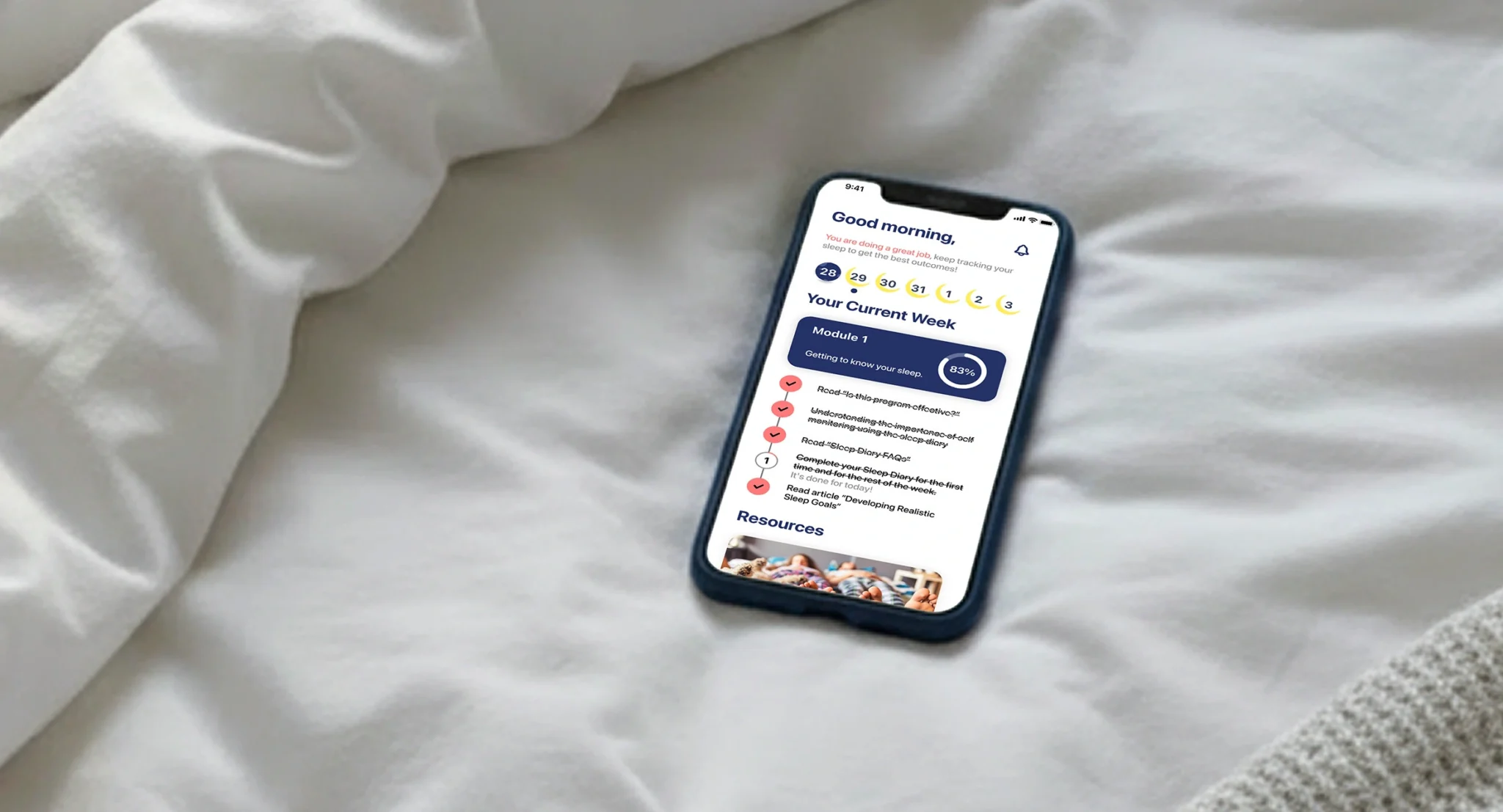
Mobile app displaying a sleep improvement program with progress tracking, daily tasks, and personalized wellness insights on a smartphone

Categories

Mental Health & Wellness

Technologies used

iOS (Swift) | Backend (Azure .NET) | Web Application 

About The Client

iCANSleep comes out of the Sleep, Health, and Wellness Lab at Memorial University of Newfoundland, led by researcher Dr. Sheila Garland. The lab set out to build the first evidence-based insomnia treatment app tailored specifically to cancer survivors in Canada, using Cognitive Behavioural Therapy for Insomnia (CBT-I) as its foundation. Sidekick Interactive partnered with the lab to turn that research into a mobile app cancer survivors could use directly, alongside a web tool for the research team behind it.

Exterior view of a Memorial University of Newfoundland building at dusk, home of the Sleep, Health, and Wellness Lab

Project Overview

The Project

Dr. Garland’s lab wanted to take a clinician-led treatment protocol, cognitive behavioural therapy for insomnia (CBT-I), out of the therapy room and onto a phone without losing what makes it work. Sidekick Interactive built a native iOS app for cancer survivors, paired with a web dashboard so the research team could manage participants and their data throughout the study.

The Context

CBT-I is a well-established treatment for insomnia, usually delivered by a trained therapist in person. The lab wanted to offer that same treatment digitally, shaped around concerns specific to cancer survivors that a generic sleep app was never built to address, while keeping the whole thing simple enough to use without any technical background.

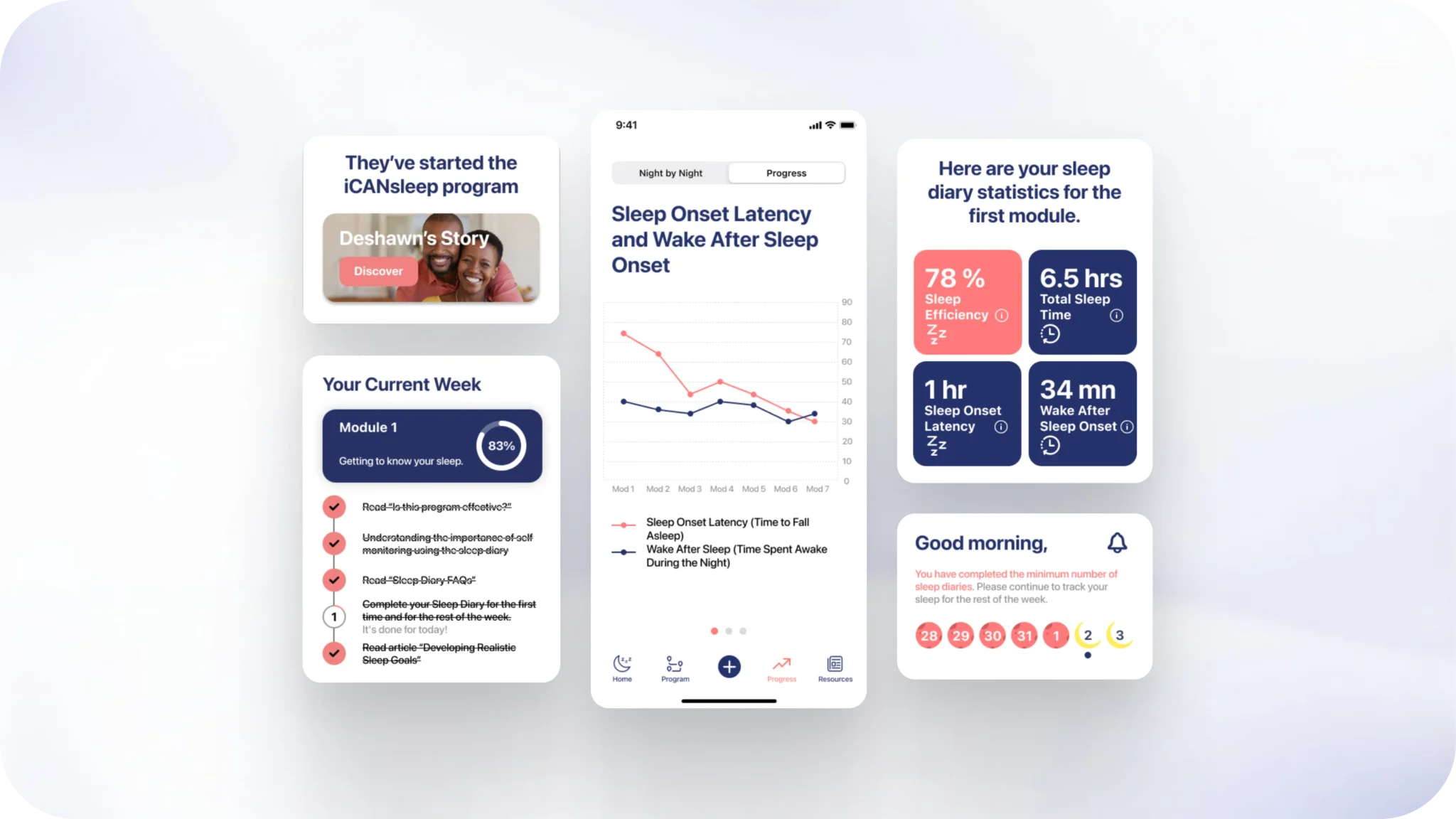
Collection of iCANSleep app screens showing module progress, a participant testimonial, sleep trend charts, and weekly sleep diary statistics

Challenges And Technical Constraints For Mhealth App Development

The Challenge

The core challenge was turning a clinical protocol normally delivered one-on-one into something that works well on a phone, without losing what makes it effective, while still feeling approachable to someone who recently went through cancer treatment. Behind the app participants see, the project also needed a research layer they’d never interact with directly: a way for the team to enrol participants, track their progress, and manage the data responsibly.

Constraints

Faithful adaptation of a CBT-I protocol built on prior clinical research, with no shortcuts that could weaken the treatment

Native iOS development able to handle daily journaling and weekly recalculations over a multi-week program

A secure backend built for sensitive health data tied to an active research study

A separate web interface for the research team, fully apart from the app participants use

An experience simple enough to complete alone, at home, with no technical background

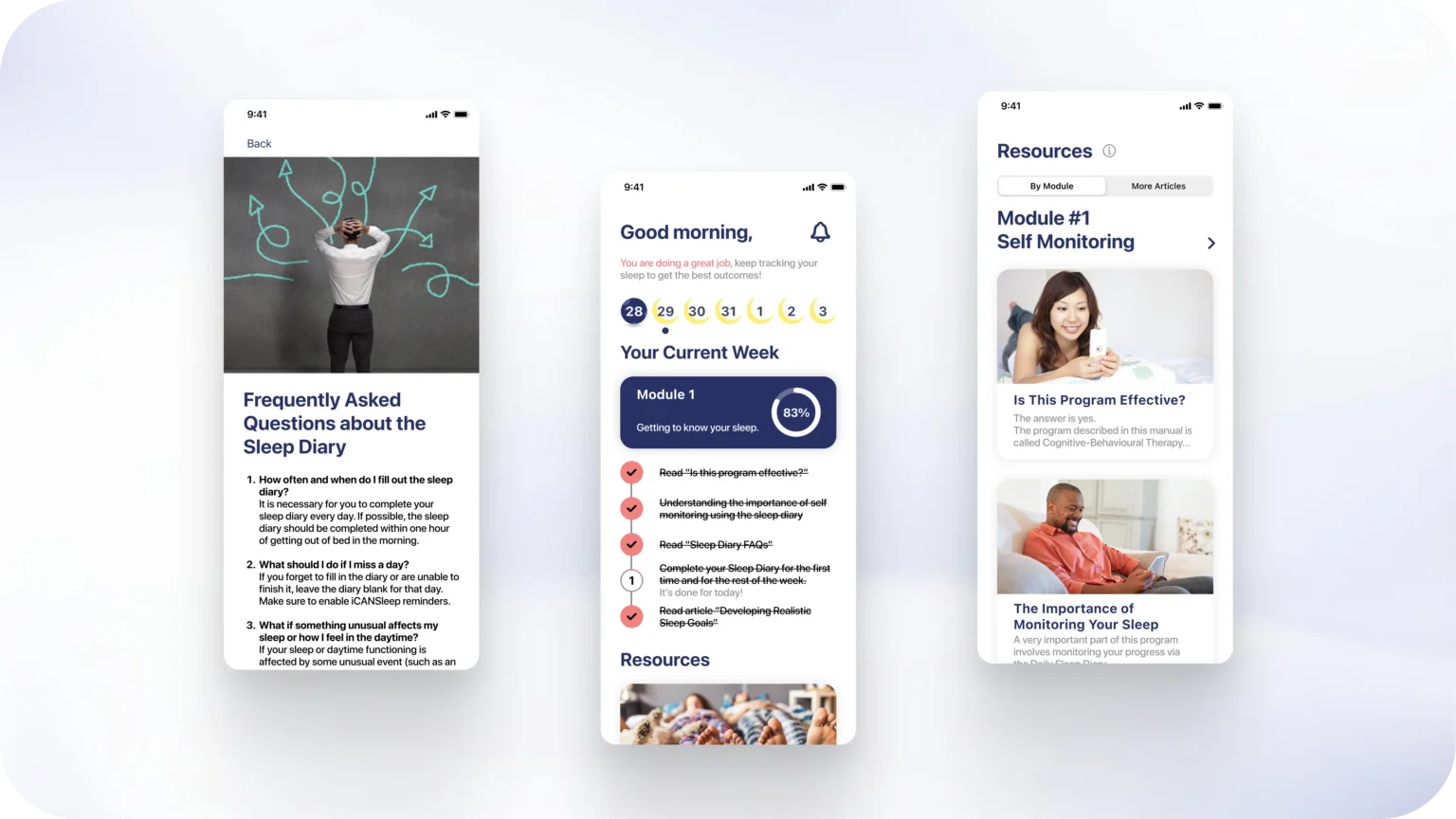
iCANSleep app screens showing a sleep diary FAQ, the home dashboard with weekly progress, and educational articles in the Resources tab

Our Approach And Solution For Mhealth App Development

A Sleep Diary That Adjusts The Treatment Automatically

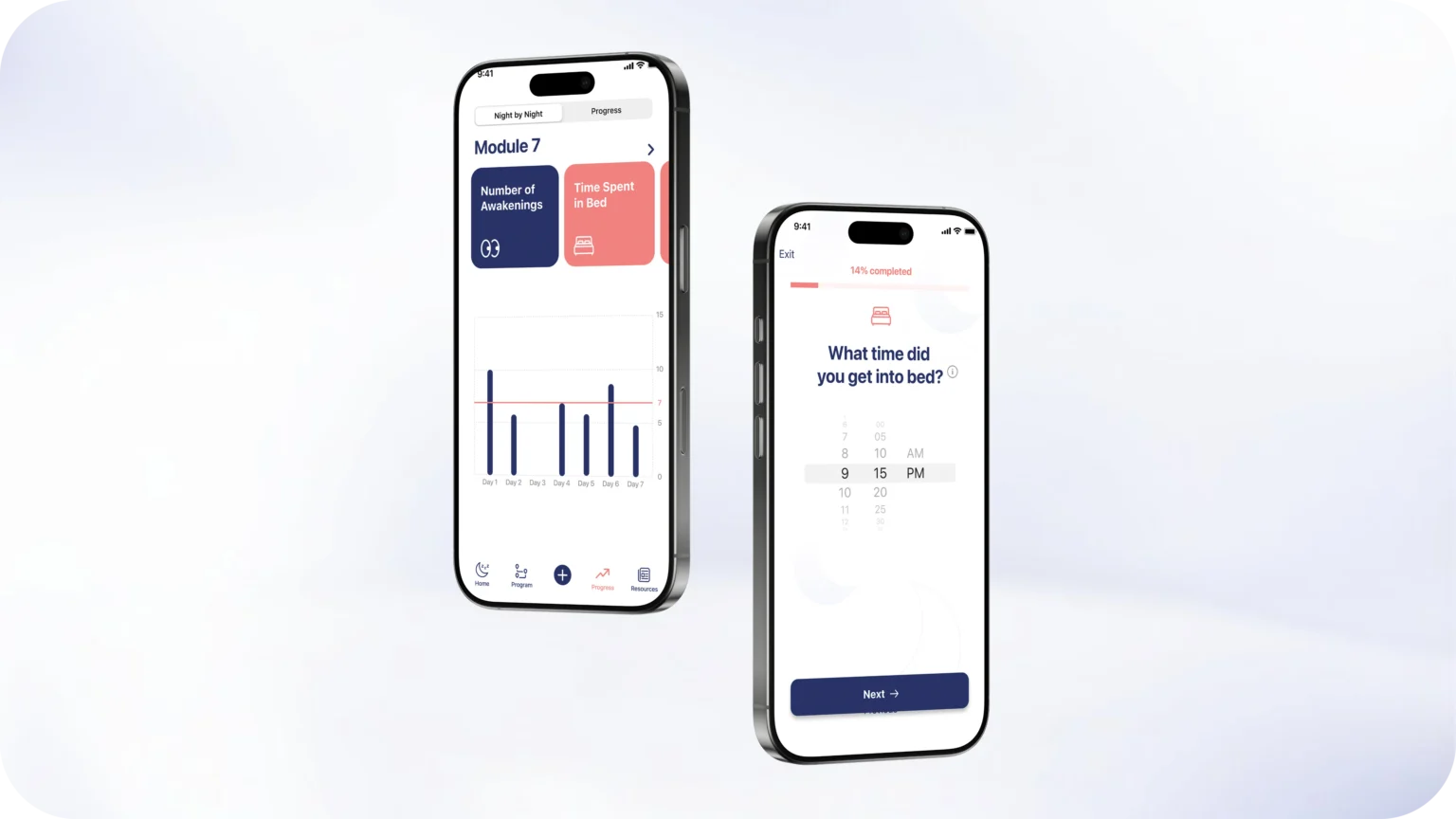
Every morning, participants log a short sleep diary: what time they got into bed, how many times they woke up, what time they got up. At the end of each week, the app uses those entries to calculate a new sleep window, called a sleep prescription, and adjusts it as the person’s sleep changes over the course of the program. It’s this weekly recalculation that keeps the protocol responsive to each participant instead of running on autopilot.

Seven Weeks Of Treatment, Paced So It Doesn't Overwhelm Anyone

The full program runs across seven weekly modules. Each one pairs the sleep diary and sleep plan with short articles on topics like managing worry or coping with pain, including stories from other cancer survivors who went through the treatment. Spacing the content this way keeps the clinical substance intact while giving participants only what they need at each stage, not the whole protocol at once.

A Dashboard For The Research Team, Kept Apart From The App Itself

On the backend, an Azure .NET infrastructure supports both the mobile app and a separate web application built for the research team. That dashboard lets the lab manage study participants and review the data collected through the app, without exposing any of it to the people using iCANSleep day to day.

Refining The App Release After Release

Since launch, the app has gone through several rounds of updates: more reliable recovery of daily survey data, better handling of participants’ medication lists, ongoing bug fixes. In a research context, that kind of upkeep carries more weight than in a typical consumer app, since every update has to protect the integrity of the data the study depends on.

iCANSleep iOS app showing weekly sleep diary progress charts and a bedtime entry screen

Results And Benefits For Icansleep's Mhealth Program

Results

Available on the App Store for iPhone users across Canada, in English and French

Rated 5 out of 5 stars by early users

Still evolving through regular updates shaped by direct participant feedback

Why the iCANsleep Chose Sidekick Interactive for its CBT-I App

Dr. Garland’s team needed a partner who could keep a clinical protocol intact while building something cancer survivors could use entirely on their own. Staying close to the research team at every stage, rather than handing off a finished product at the end, is what kept the app faithful to the science behind it.

“Throughout the development process, we worked closely with the researcher to incorporate user feedback and ensure that we maximized the budget to achieve her objectives. This collaborative approach ensured that every aspect of the app met the specific needs of cancer survivors.”
Alexandre Boyer-Laporte, Co-Founder, Sidekick Interactive

Sidekick Interactive's Expertise In Mental Health And Digital Health Research Apps

This project reflects our experience building for mental health and MedTech clients, where a mobile app has to hold up to the same rigor as the clinical research behind it. Native iOS development, a secure backend, and a research-facing web tool all had to work as one system, not three separate pieces stitched together afterward. That’s the kind of coordination we bring to digital health projects, whether the end user is a patient, a clinician, or a research team.

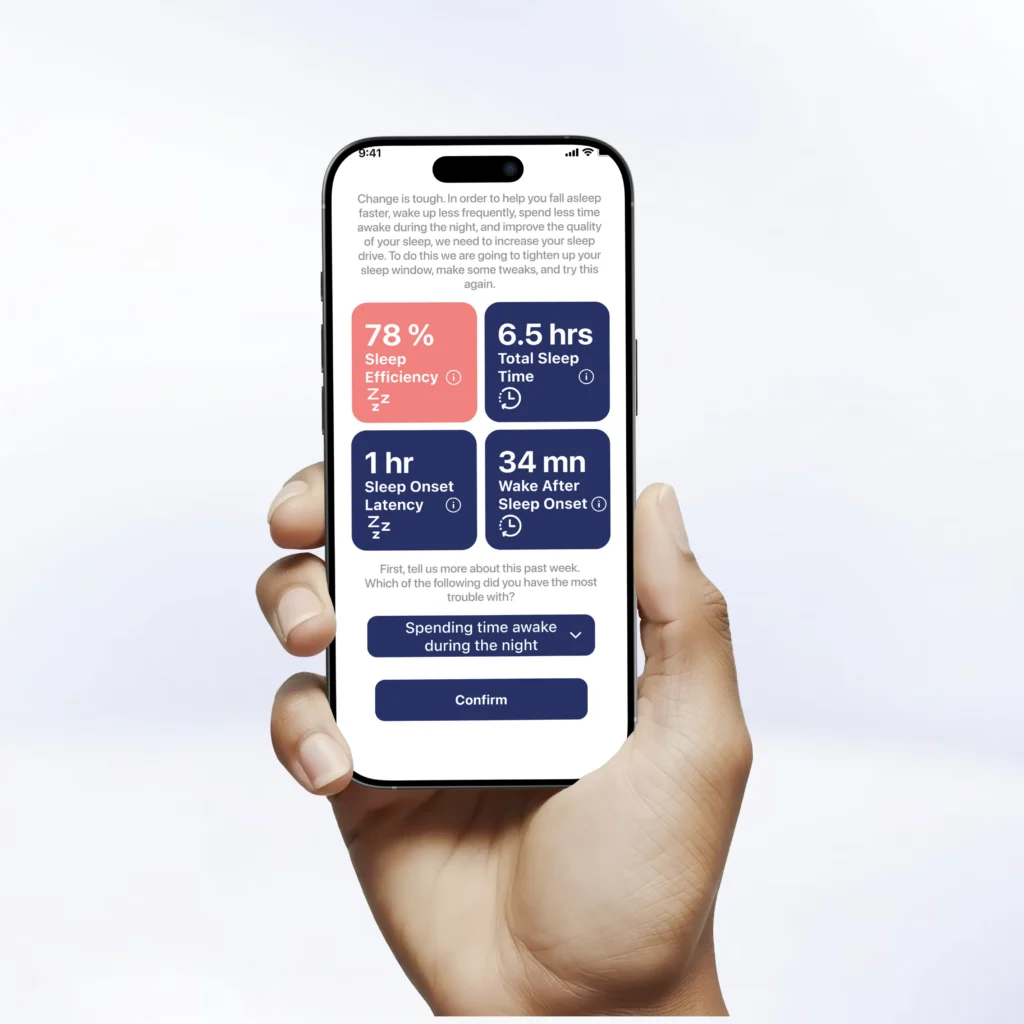
iCANSleep app displaying sleep efficiency, total sleep time, and a weekly check-in question for CBT-I treatment

Other Projects

User interacting with an augmented reality interface to view and manipulate a 3D building model in a real environment

Concrete Structure

Technician using a mobile app to monitor and manage connected IoT devices via Bluetooth Mesh in an industrial environment

ABB Bluetooth Mesh Device Manager App

Let's talk about your 
idea.
project.
application.
Scroll to Top
Sidekick Interactive
Privacy Overview

This website uses cookies so that we can provide you with the best user experience possible. Cookie information is stored in your browser and performs functions such as recognising you when you return to our website and helping our team to understand which sections of the website you find most interesting and useful.